


South Africa’s new energy vehicle market is gaining serious momentum, and BYD is putting more infrastructure behind its local push.
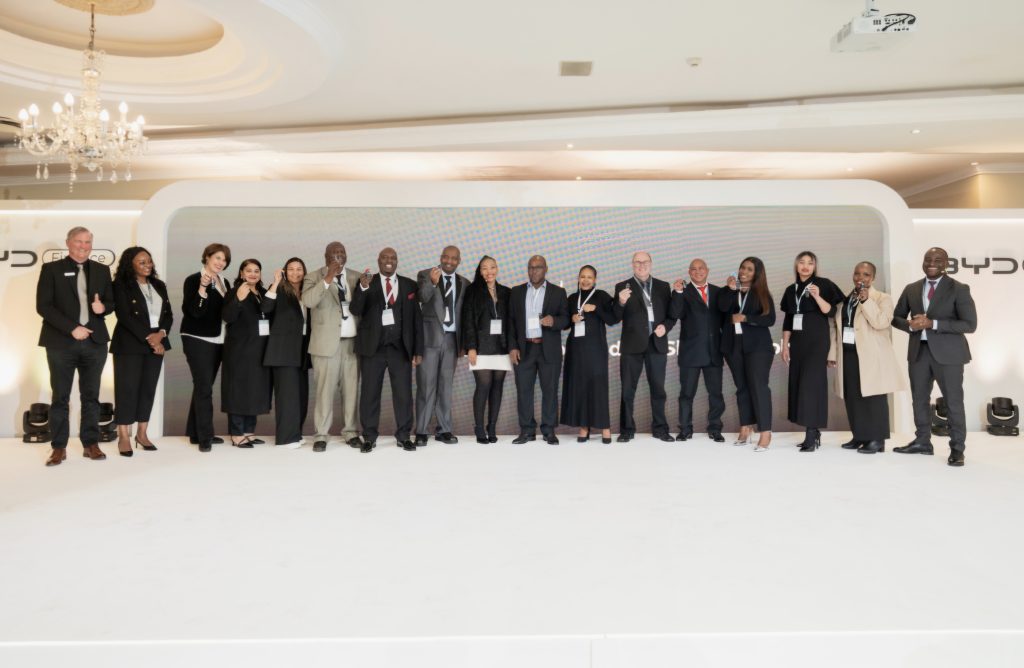
BYD Auto South Africa and Absa have extended their strategic cooperation through BYD Finance, a product of Absa, strengthening the financial ecosystem supporting the Chinese manufacturer’s growing presence in the country.
The timing is significant. Between January and May 2026, new energy vehicle sales increased by 78.8% year on year, according to Absa data. Plug-in hybrid electric vehicle (PHEV) volumes jumped 681%, while battery electric vehicle (BEV) volumes climbed 193%.
For a market where electric mobility remains a relatively small slice of total vehicle sales, those numbers point to a rapidly changing landscape.
The EV Market Is Finding Its Traction
The biggest challenge for new energy vehicles in South Africa has never been simply getting the cars onto showroom floors.
Access, affordability, infrastructure and consumer confidence all play a role in convincing drivers to make the switch.
That is where BYD and Absa are looking to build something bigger than a conventional vehicle-finance arrangement.
The extended cooperation covers customer vehicle finance, dealership wholesale finance, insurance solutions and other value-added services, giving buyers and dealers more support as the market develops.
“For BYD, this is about more than bringing world-leading vehicles to market. It is about building the ecosystem that helps more South Africans access them,”.
said Steve Chang, Managing Director of BYD Auto South Africa
That ecosystem could prove crucial as the manufacturer scales its footprint.
From 52 Dealerships to 80
BYD currently has 52 dealerships nationwide, with the company targeting 80 by the end of 2026.
That expansion matters because the EV experience does not start and end with the vehicle itself.
For consumers considering a switch from an internal-combustion engine car, access to dealerships, finance, insurance, servicing and product information can make the difference between curiosity and ownership.
A wider network also gives BYD greater visibility outside the country’s established automotive centres, potentially bringing new energy mobility to a broader audience.
And the growth is already showing in sales.
Between January and May 2026, BYD recorded 2,011 units sold year to date, making it South Africa’s second best-selling new energy vehicle brand over that period.
Finance Could Be the Next Accelerator
The numbers suggest consumer attitudes are changing, but affordability remains one of the major barriers to wider adoption.
Charl Potgieter, Managing Executive for Absa Vehicle and Asset Finance, says the bank has seen growing acceptance of electric mobility through its own new energy vehicle finance portfolio.
“While affordability and infrastructure are still important factors, there is growing acceptance of electric mobility,”.
Potgieter said
That makes financing a potentially powerful accelerator.
As more models enter the market and manufacturers compete across different price and vehicle segments, accessible finance could help turn new energy vehicles from an emerging technology into a realistic option for more South African motorists.
A Bigger African Play
The cooperation also extends beyond BYD’s immediate South African ambitions.
Absa operates across 14 African countries, with banking licences in 11 markets and representative offices in three. The bank and BYD could therefore explore financial solutions and business relationships in markets where BYD already operates or may establish a presence.
That gives the partnership a potential regional dimension.
BYD itself has moved rapidly from its origins as a battery technology company, founded in 1995, to becoming one of the world’s major new energy vehicle manufacturers. The company sold more than 4.27 million new energy passenger vehicles globally in 2024.
South Africa is now part of that expansion story.
The Road Ahead
The country still has significant hurdles to overcome before electric and hybrid vehicles become genuinely mainstream.
Charging infrastructure needs to keep pace. Vehicle affordability remains critical. Consumers need confidence in battery technology, ownership costs and resale values.
But the combination of rising sales, more vehicle choices, expanding dealerships and stronger finance options suggests the market is moving.
BYD’s next challenge is no longer simply introducing new energy vehicles to South Africa—it is making them easier to buy, own and live with.
If that infrastructure keeps expanding at the same pace as consumer interest, South Africa’s new energy vehicle scene could be heading into its most competitive phase yet.