

Motul is expanding its technical collaboration with McLaren Racing, bringing specialised lubricant technology into two of motorsport’s toughest arenas: Formula 1 and the FIA World Endurance Championship (WEC).
The partnership combines Motul’s expertise in high-performance lubricants with McLaren Racing’s engineering capabilities, with technology supporting the McLaren MCL40’s gearbox and differential during the 2026 Formula 1 season. From 2027, Motul is also set to supply engine and transmission lubricants for McLaren Racing’s upcoming WEC Hypercar programme.

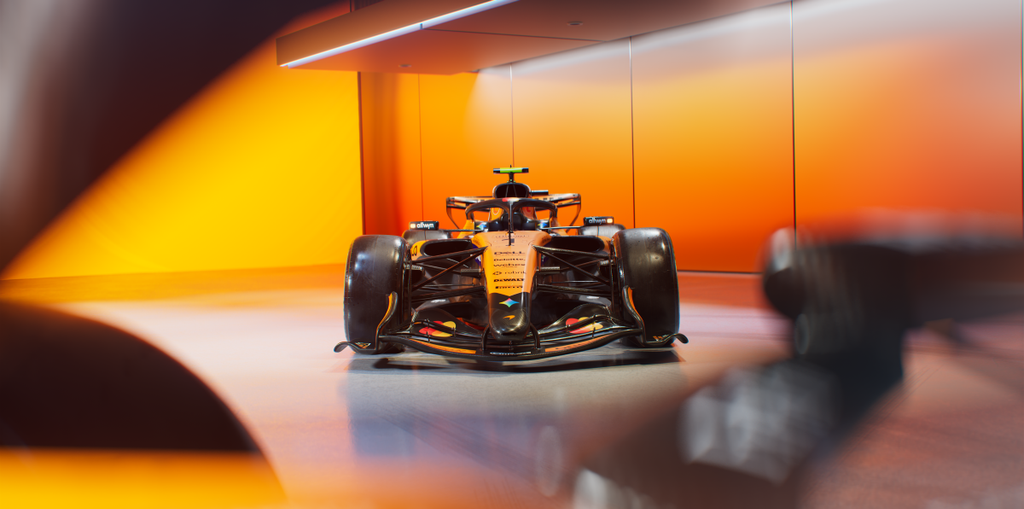
For motorsport enthusiasts, this is about more than two major names joining forces. It is about the engineering and testing that help racing machines withstand extreme temperatures, demanding mechanical loads and relentless competition.
Inside the Engineering Behind McLaren’s F1 Performance
Developing a lubricant specifically for a Formula 1 car is a serious technical undertaking. Motul’s research and development teams in France and Japan worked alongside McLaren Racing for nine months to develop a bespoke formulation for the MCL40’s gearbox and differential.
The process involved more than 40 tests, covering tribological performance, material compatibility, and final validation at the McLaren Technology Centre in Woking, United Kingdom. These tests help engineers assess how lubricants behave under demanding operating conditions, with the aim of improving mechanical efficiency and transmission reliability without compromising performance throughout a Grand Prix.
Motul’s collaboration with McLaren builds on more than a decade of technical cooperation across various GT3 programmes. The latest development takes that relationship into Formula 1, where precision engineering and marginal performance gains can make a significant difference.
Carlo Savoca, Chief Marketing Officer of Motul Asia Pacific, said the collaboration provides an opportunity to develop lubricant technology through the demands of elite motorsport, using track experience to inform future engineering developments.
South African Motorsport Remains Part of the Picture
The partnership also has relevance for South Africa’s motorsport community.
Mercia Jansen, Managing Director of Motul South Africa, highlighted the connection between international racing technology and the local competition scene, referencing initiatives and teams including the Vilaca Racing Time Attack Series, Franco Scribante Racing, Red-Lined Motorsport and competitors at the Simola Hillclimb.
Motul’s 300V range remains a key part of its high-performance motorsport offering, supporting applications where engine protection and performance are critical considerations.
While Formula 1 operates at a different level of technical complexity from most local racing environments, the broader principle remains the same: lubricant performance matters when engines and mechanical systems are pushed hard.
For South African enthusiasts, circuit racers and rally-raid followers, developments at the highest levels of international motorsport offer an insight into the engineering priorities shaping performance technology.
From Formula 1 to the WEC Hypercar Challenge
The next major chapter begins in 2027, when Motul is scheduled to support McLaren Racing’s FIA World Endurance Championship Hypercar programme.
Unlike Formula 1, where teams compete in Grand Prix races, endurance racing places a sustained emphasis on reliability, efficiency and the ability to perform over extended periods. The 24 Hours of Le Mans is one of the sport’s most demanding examples, testing cars, drivers and engineering teams through an entire day and night of competition.
Motul will supply engine and transmission lubricants for McLaren Racing’s planned Hypercar programme and provide technical support as the team prepares for its WEC debut.

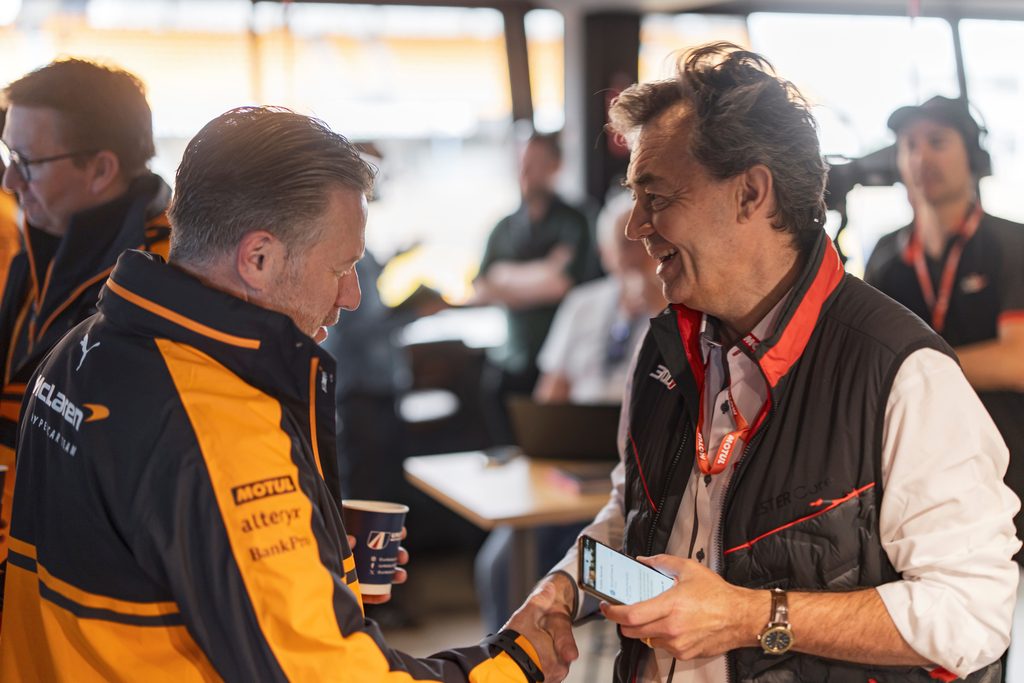
The collaboration will also draw on Motul’s Racing Lab, a mobile laboratory designed to analyse fluid samples and assess factors such as mechanical wear, oxidation, thermal stability and fuel dilution. These insights help engineers understand what is happening inside a vehicle’s mechanical systems and identify opportunities for further development.
Motul’s endurance racing experience stretches back more than seven decades, with its association with the 24 Hours of Le Mans dating to 1954. Its involvement across LMGT3, LMP2 and Hypercar competition has helped establish a long-standing presence in the discipline.
The company also strengthened its relationship with the FIA World Endurance Championship and Le Mans through an official lubricant partnership established in 2016.
Racing Technology Beyond the Track
Motul’s motorsport activities extend across Formula 1, the FIA World Endurance Championship, MotoGP, Dakar, MXGP and Enduro GP.
Each discipline presents different engineering challenges, from the demands of high-speed circuit racing to the heat, dust and punishing terrain encountered in rally-raid competition.
The information gathered in these environments contributes to Motul’s ongoing lubricant development, although products and formulations remain specific to their intended applications.
For enthusiasts, the significance lies in the relationship between competition and engineering: motorsport provides an environment where fluids, materials and mechanical systems are tested under demanding conditions, generating knowledge that can inform future product development.
With its expanded collaboration with McLaren Racing, Motul is strengthening its presence across both Formula 1 and endurance racing. The 2026 F1 season provides the immediate platform, while the planned 2027 WEC Hypercar programme sets up the next phase of the partnership.
Two elite racing disciplines, one shared focus: extracting performance while maintaining the reliability required to compete at the highest level.
For more information: Motul South Africa