
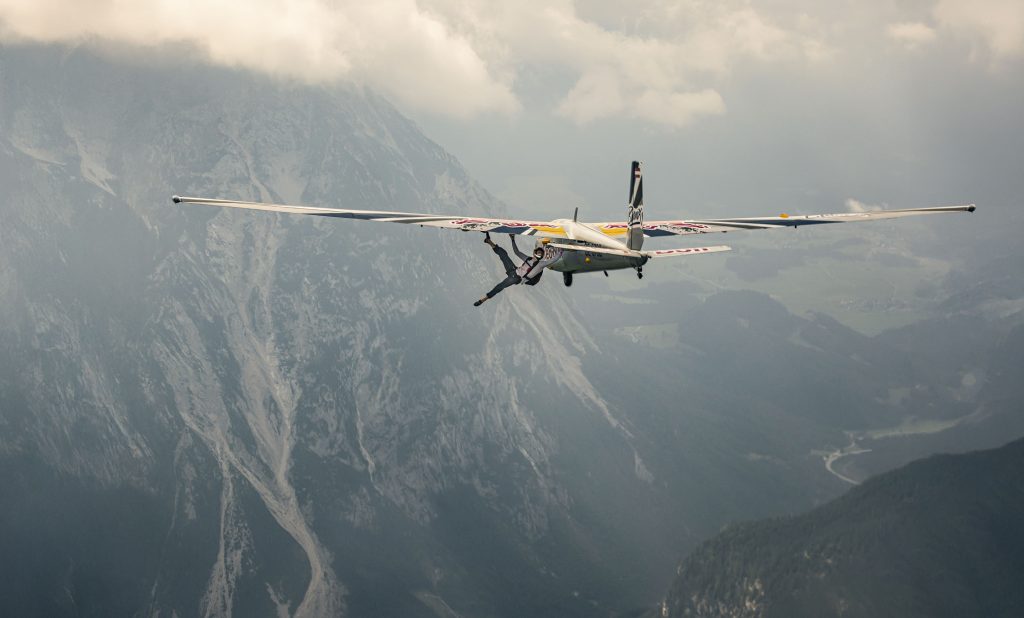
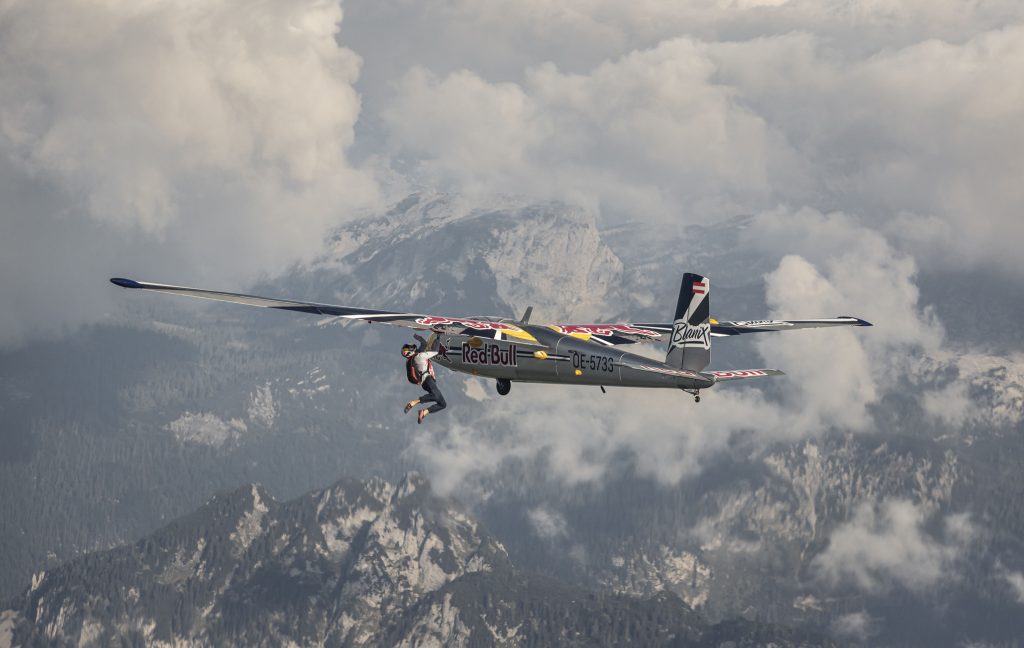
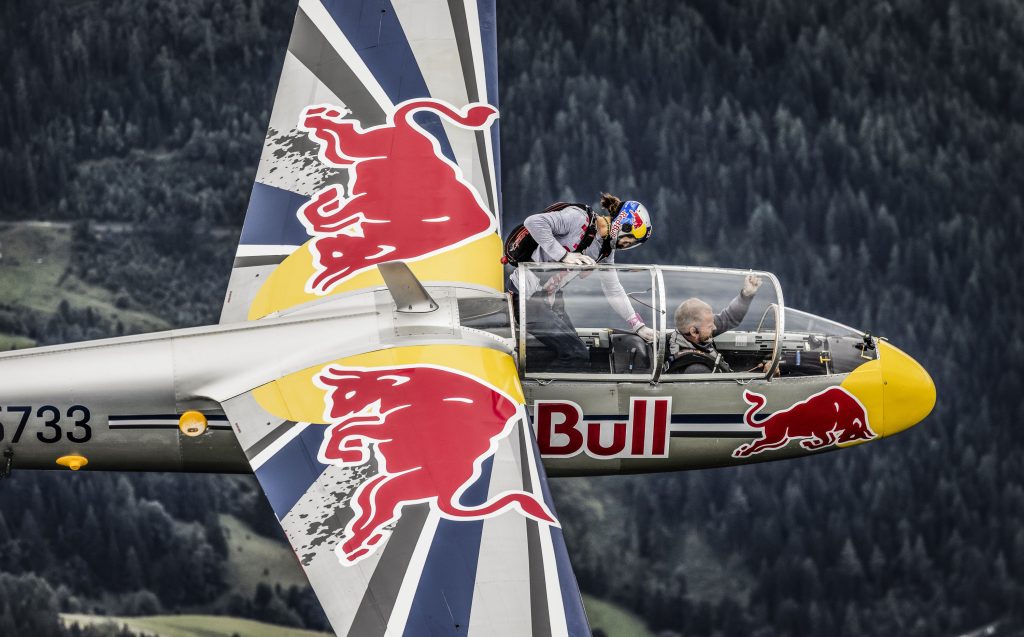
Slovenian professional climber Domen Škofic has written his name into the history books by completing the world’s first flying climbing route. Dubbed Plane Climb, the project saw Škofic scaling a specially constructed route on the wings of a Red Bull Blanix glider – all while flying at an altitude of 2,500 metres and speeds reaching up to 100 km/h.
A Route Above the Clouds
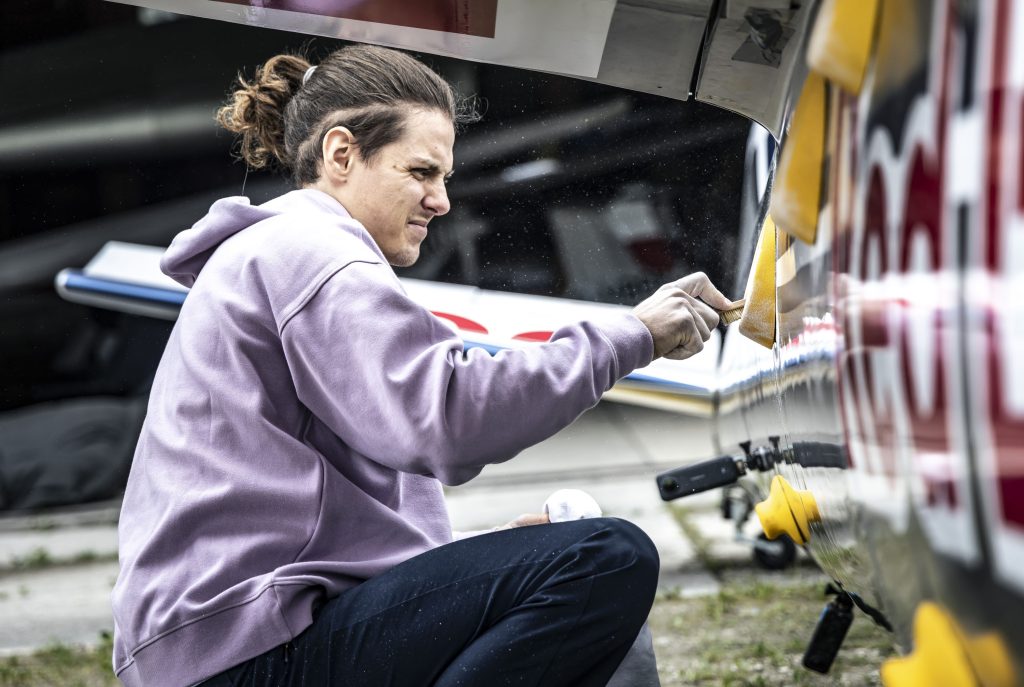
In Aigen im Ennstal, Austria, a legendary Blanik-L13 aircraft of the Red Bull Blanix Team was transformed into a three-dimensional climbing route high in the sky. Equipped only with a 12-kilogram parachute, Škofic climbed in a figure-eight loop (“wing-to-wing”) around both wings of the aircraft, passing over the underside and maneuvering across sections with technical precision.
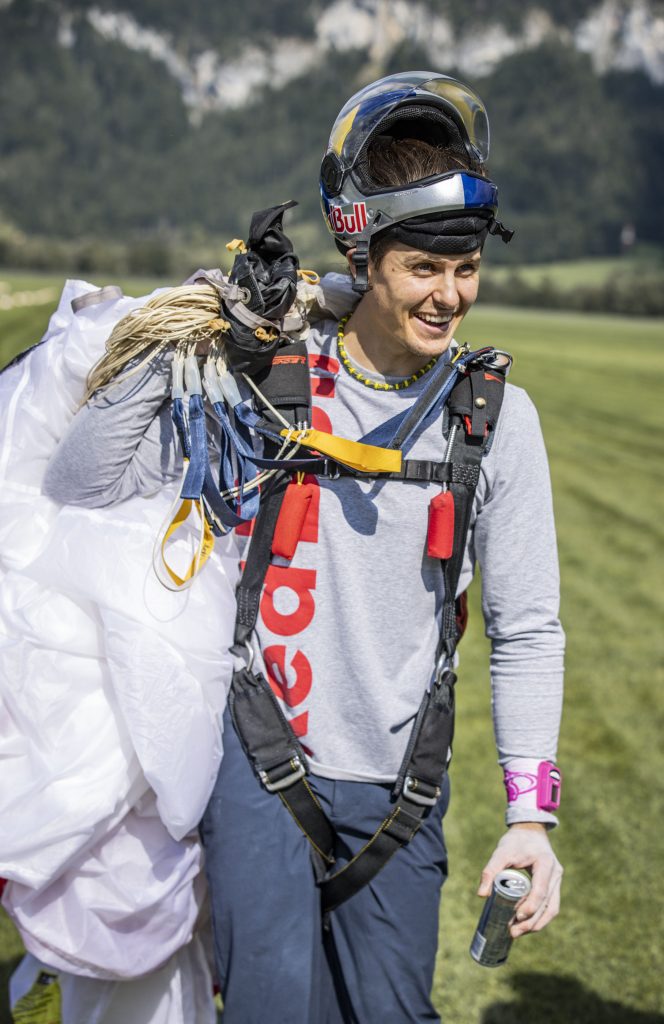
The route was rated at a climbing difficulty of 8a, but unlike any vertical wall, Škofic had to battle headwinds of 80–100 km/h, perceived temperatures of -10 °C, and fluctuating G-forces. After about a minute of intense climbing, the 31-year-old Slovenian reached the end of the route and finished with a spectacular parachute backflip jump from 1,500 metres – a symbolic “victory jump” celebrating courage, skill, and the relentless pursuit of pushing limits.
Emotion & Motivation
For Škofic, Plane Climb was more than a sporting feat:
“It was much harder than expected – an experience that I can hardly put into words. There has definitely never been anything like it before,”.
he said
Despite early doubts about its achievability, meticulous preparation in wind tunnels, parachute training, and dozens of simulations made success possible. Known for his extraordinary talent, Škofic was one of the youngest to climb a 9a route at 15 years old and went on to win the Lead Climbing World Cup in 2016. In May 2024, he completed his toughest climb yet, “Move” (9b+).
His lifelong fascination with both climbing and skydiving drove him to attempt this pioneering project. The toughest challenge? Keeping his hands warm and steady while managing airflow and G-forces.
Technology & Teamwork
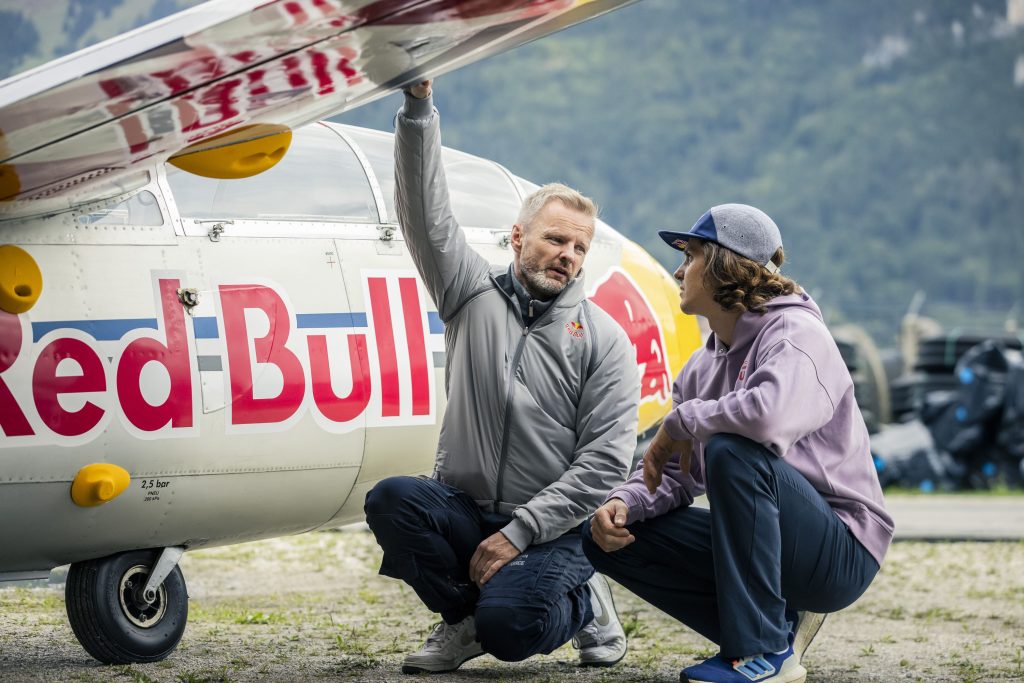
The project was not only a test of human endurance but also of engineering and aviation. The Blanik glider, known for its stability at slow speeds, was fitted with aerodynamic climbing handles designed by Škofic’s father, Pavel Škofic – a mechanical engineer and co-inventor of the carving ski. Each handle, attached with millimetre precision, could withstand loads of up to 1.2 tonnes.
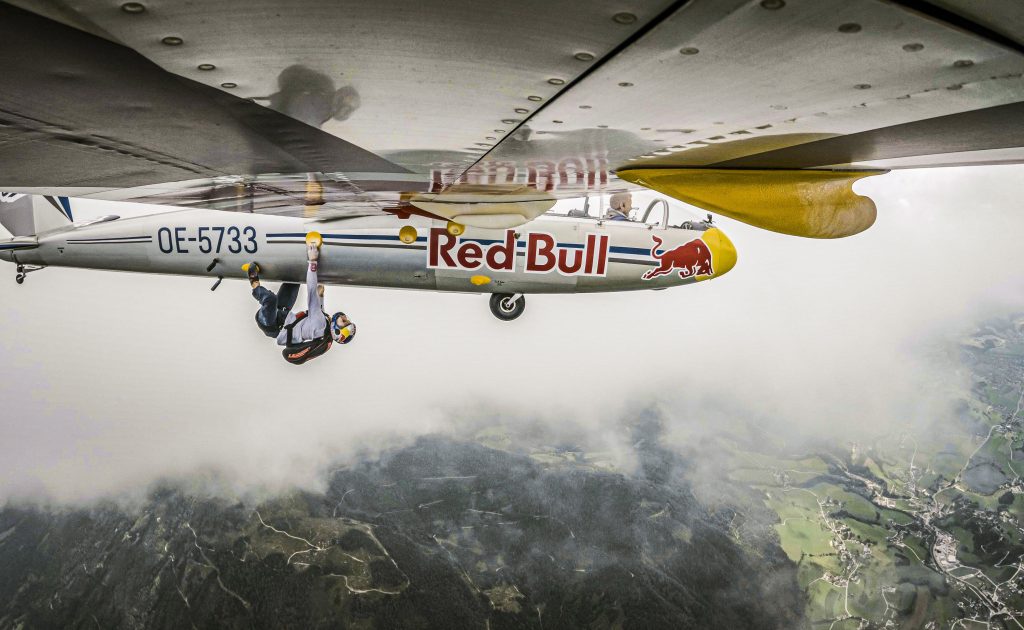
Red Bull Blanix pilot Ewald Roithner played a crucial role, keeping the aircraft steady while Škofic climbed.
“We practised and discussed every move on the ground. In the air, only minimal communication was necessary – the procedures had to be perfect,”.
Roithner explained
Nine onboard cameras captured the breathtaking achievement from every angle, blending extreme sports, engineering, and aviation into one unforgettable spectacle.
A Project Between Heaven and Earth
Plane Climb is more than just a record-breaking stunt – it’s a symbol of human ingenuity and daring. At 2,500 metres above the Austrian Alps, Škofic proved that even the sky is not the limit.