
The spiritual home of downhill racing delivered exactly what the discipline promises: speed, risk, chaos and razor-thin margins.
The first UCI Downhill World Cup visit to Whistler Mountain Bike Park in British Columbia produced a final packed with crashes, disqualifications and late-race drama. When the dust—and mud—settled, Asa Vermette and Valentina Höll stood at the top.
For Vermette, the victory carried even greater significance. His run not only earned him the Elite Men’s win but also moved him into the overall lead heading into next weekend’s decisive finale at Lake Placid.
Höll, meanwhile, added another major chapter to an already remarkable season, claiming her sixth UCI Downhill World Cup victory of 2026.
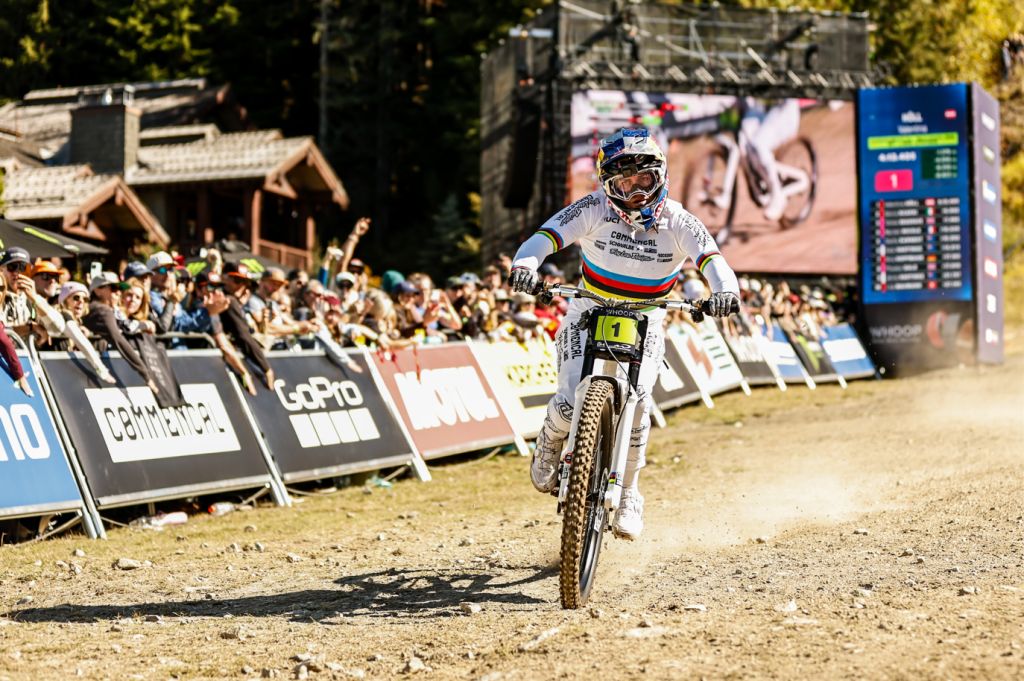
Vermette Turns Pressure Into Four Seconds
The Elite Men’s final initially looked as though it might belong to an unlikely name.
Luke Wayman produced an extraordinary early run and remained in the hotseat for roughly 90 minutes. His benchmark survived challenge after challenge, while overall leader Jordan Williams struggled to find his usual pace and eventually finished 21st.
Then came the chaos.
Lachie Stevens-McNab appeared to have produced a ride capable of challenging for the podium, only for his result to be overturned after a replay showed that he had briefly left the course.
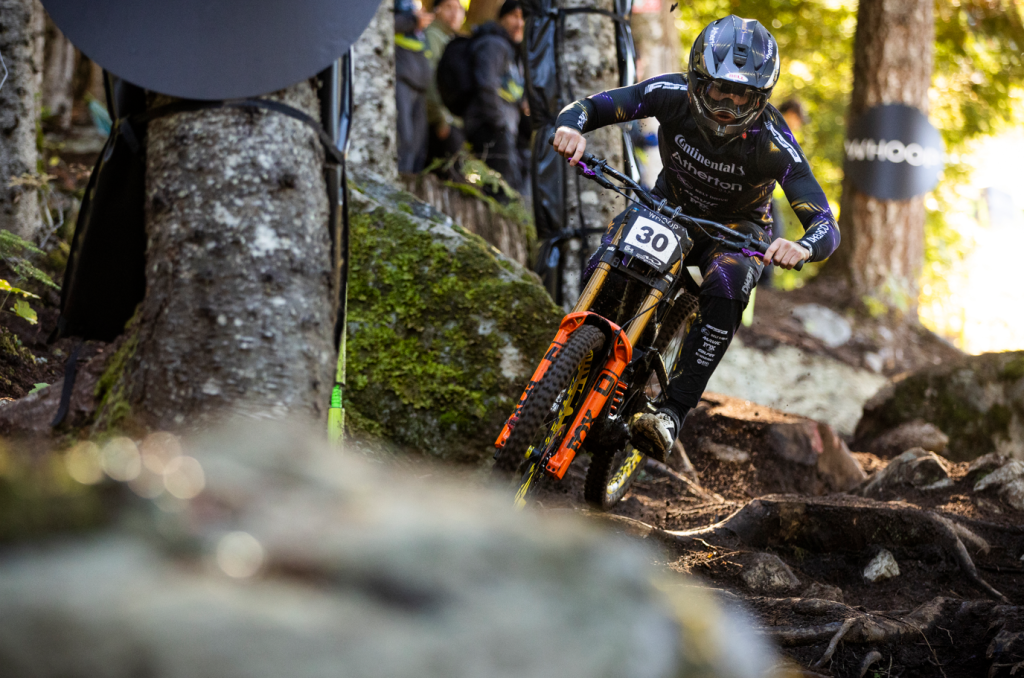
Henri Kieffer‘s challenge ended dramatically at the final jump after he unclipped before take-off and crashed heavily. He was able to walk away, but the incident underlined the brutal consequences of small mistakes on a track where riders operate at extraordinary speed.
Then Max Alran changed the equation.
The COMMENCAL rider produced a blistering run to move ahead of Amaury Pierron and leave only Vermette standing between him and victory.
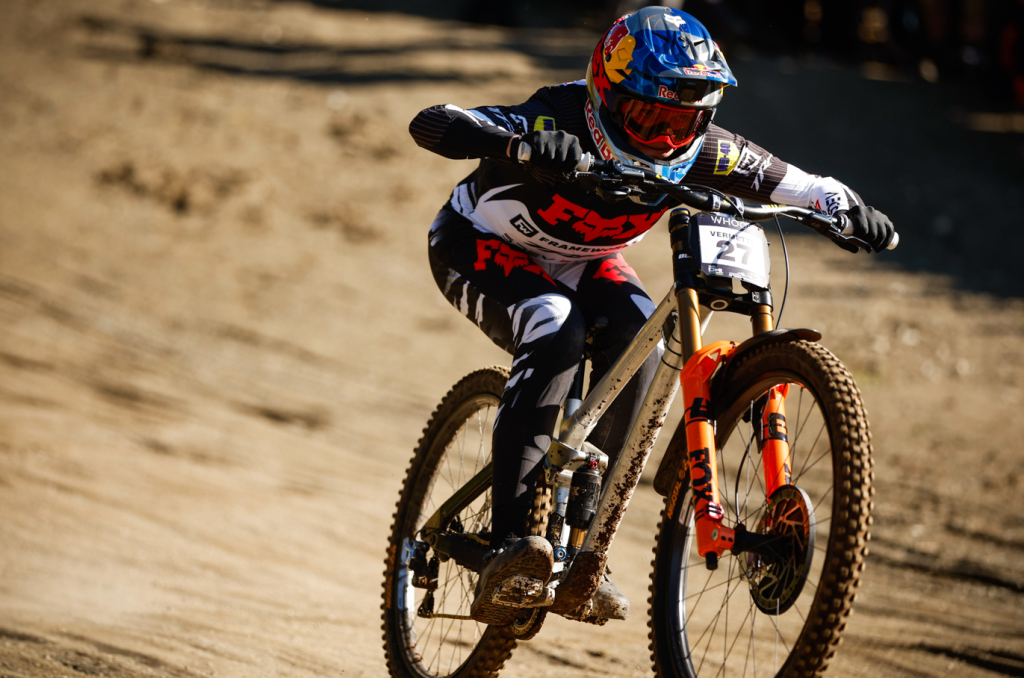
Vermette responded with exactly the kind of run required from the final rider down the mountain.
He turned the final three time checks green before crossing the line four seconds faster than Alran.
That performance was enough to secure both the race win and the overall championship lead.
“I’m just so stoked, I did the run that I wanted to.”
The result leaves three riders mathematically in contention for the men’s title. Vermette carries a 96-point advantage over Williams, while Pierron remains 174 points behind with 250 points still available.
That means the championship fight moves directly from Whistler’s technical brutality to the final showdown at Lake Placid.
Höll Finds the Limit at Whistler
The women’s final delivered its own battle against the clock.
Tahnée Seagrave established the early benchmark, but Valentina Höll quickly demonstrated why she has been so difficult to beat this season.
The Austrian came down the mountain and immediately changed the pace of the final, going seven seconds faster than the existing benchmark.
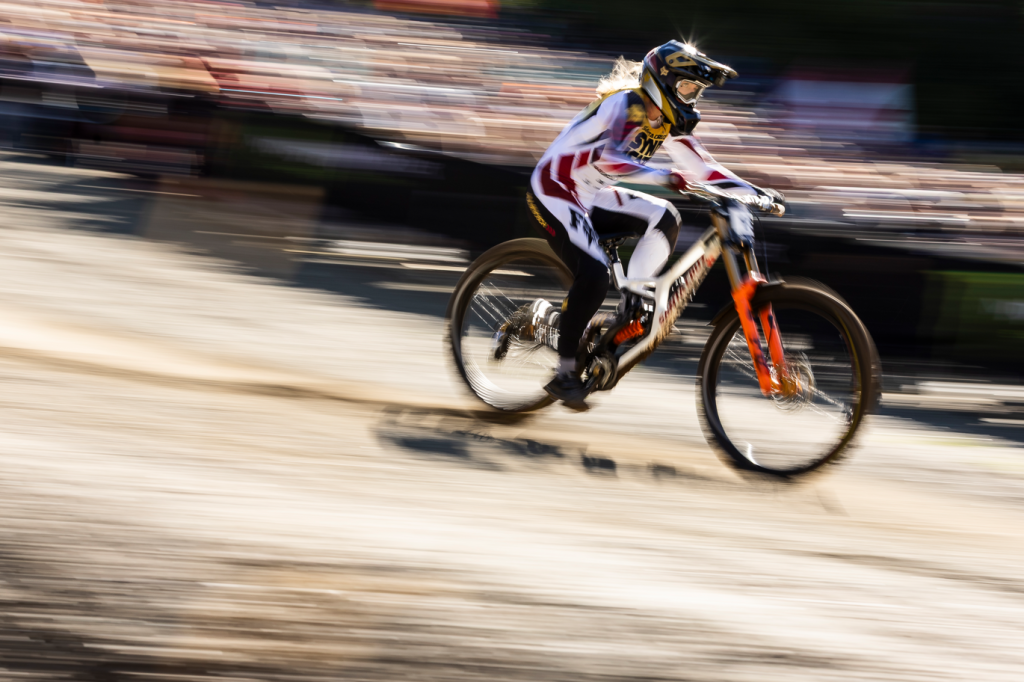
Gracey Hemstreet then produced the response the home crowd had been waiting for.
The Canadian entered the closing section almost three seconds behind Höll but continued clawing back time. She attacked the final part of the course and crossed the line just 0.3 seconds behind the eventual winner.
It was a spectacular near-miss on home soil.
Höll survived the challenge, with Lisa Bouladou completing the podium in third.
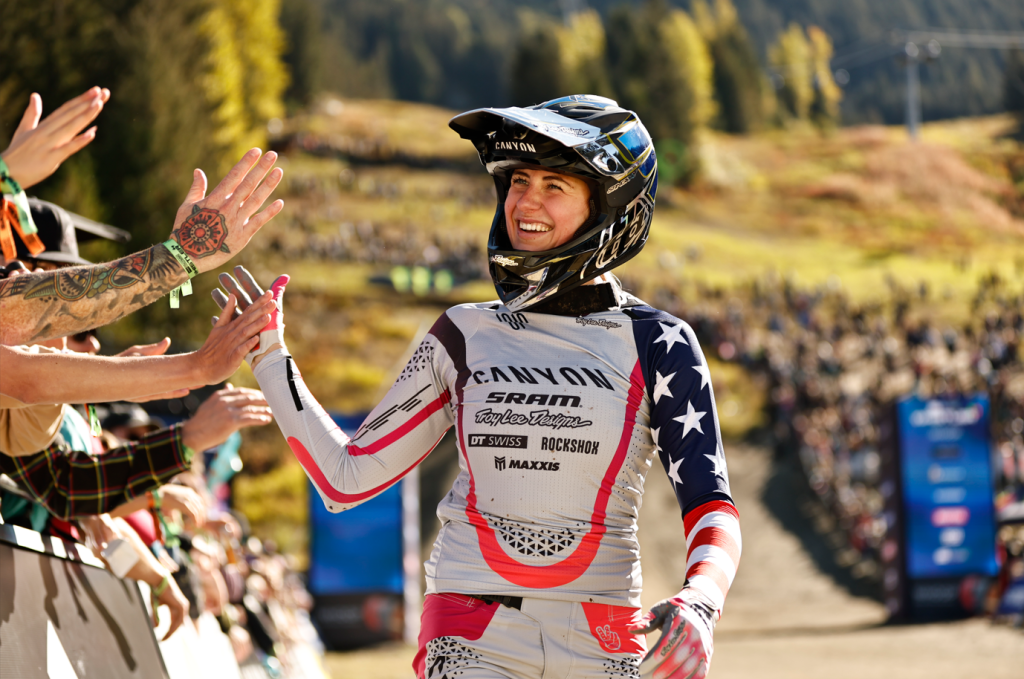
Victory marked Höll’s sixth World Cup win of the season and made her only the fourth woman to achieve six victories in a single campaign.
Whistler Rewards Precision—and Punishes Mistakes
The weekend demonstrated just how quickly a downhill run can change.
A rider can build an advantage through the upper sections before losing it in a muddy root section, a technical rock garden or a final jump. The difference between winning and finishing outside the podium can be measured in fractions of a second.
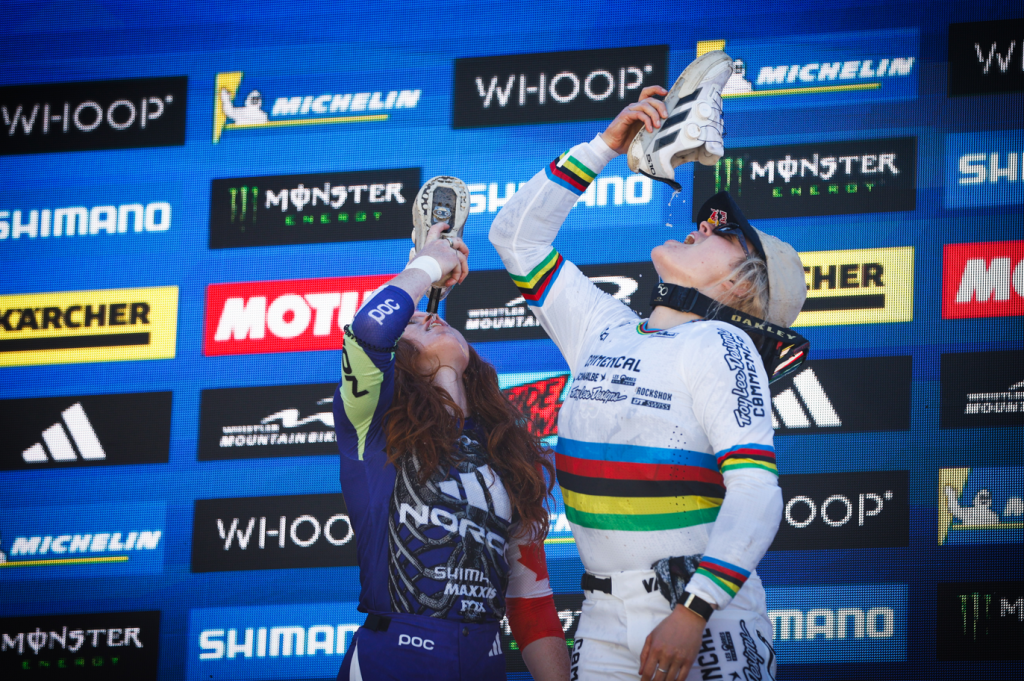
That was particularly clear in Hemstreet’s charge. Her late acceleration nearly erased Höll’s advantage, while Eliana Hulsebosch‘s challenge disappeared in the muddy roots above the Ride Wrap Rock Garden.
For Höll, however, Whistler represented something bigger than another result.
She first visited the venue at 14 years old and described racing there as a lifelong dream.
“I came to Whistler for the first time when I was 14, it was always my biggest dream growing up,”.
she said
Hemstreet’s second-place finish also carried historical significance. Her home podium was marked with a cedar trophy honouring local downhill legend Stevie Smith, featuring Indigenous artwork by Levi Nelson of the Lil’wat Nation.
Lake Placid Now Holds the Answers
There is barely time for the riders to reset.
The WHOOP UCI Mountain Bike World Series now heads to Whiteface Mountain in Lake Placid, where the downhill season reaches its final weekend on Sunday, 4 October.
For Vermette, Williams and Pierron, every split will matter.
For Höll, Whistler adds another landmark victory to a season already filled with them.
And after a weekend where crashes, course deviations, mud and fractions of a second shaped the results, one thing is certain: the final downhill battle of 2026 has everything to play for.